Gutterwork
Gutter
Authority
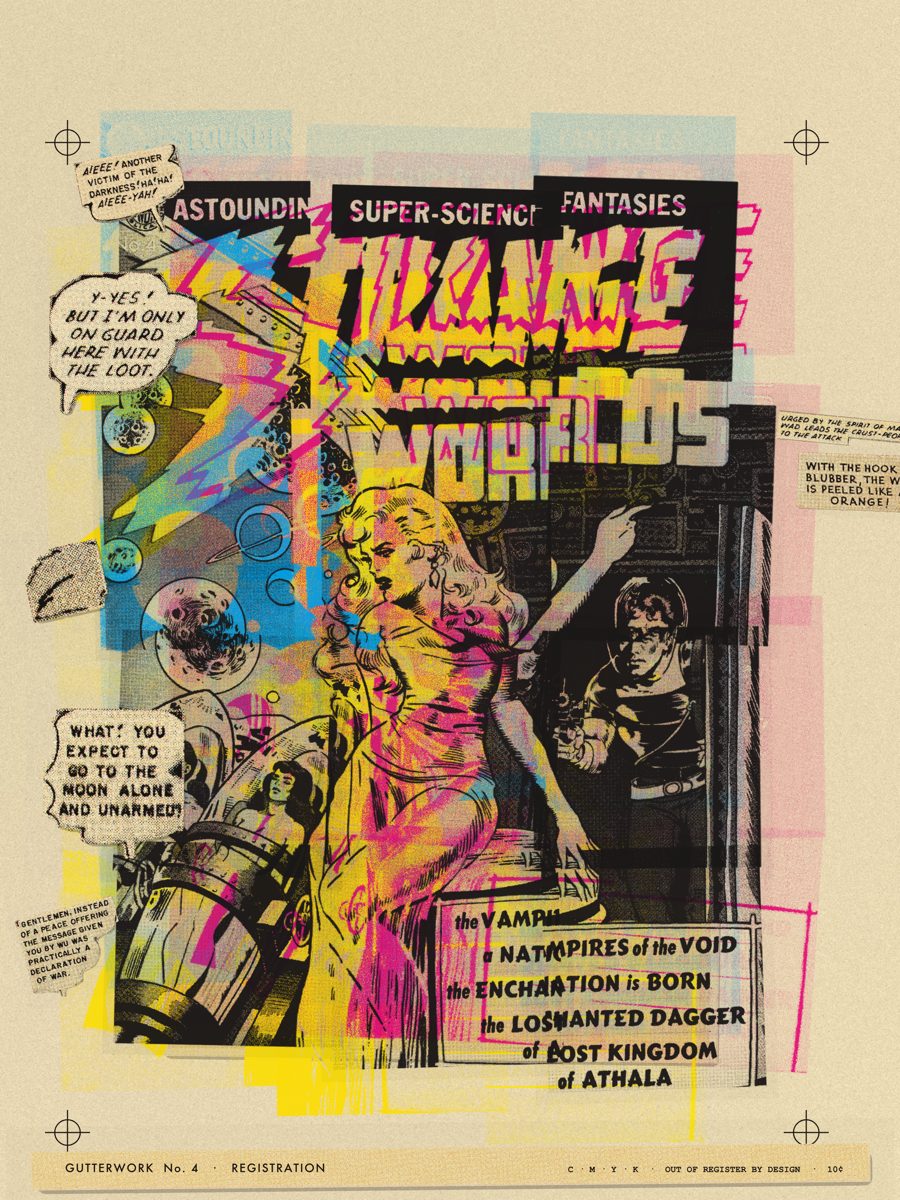
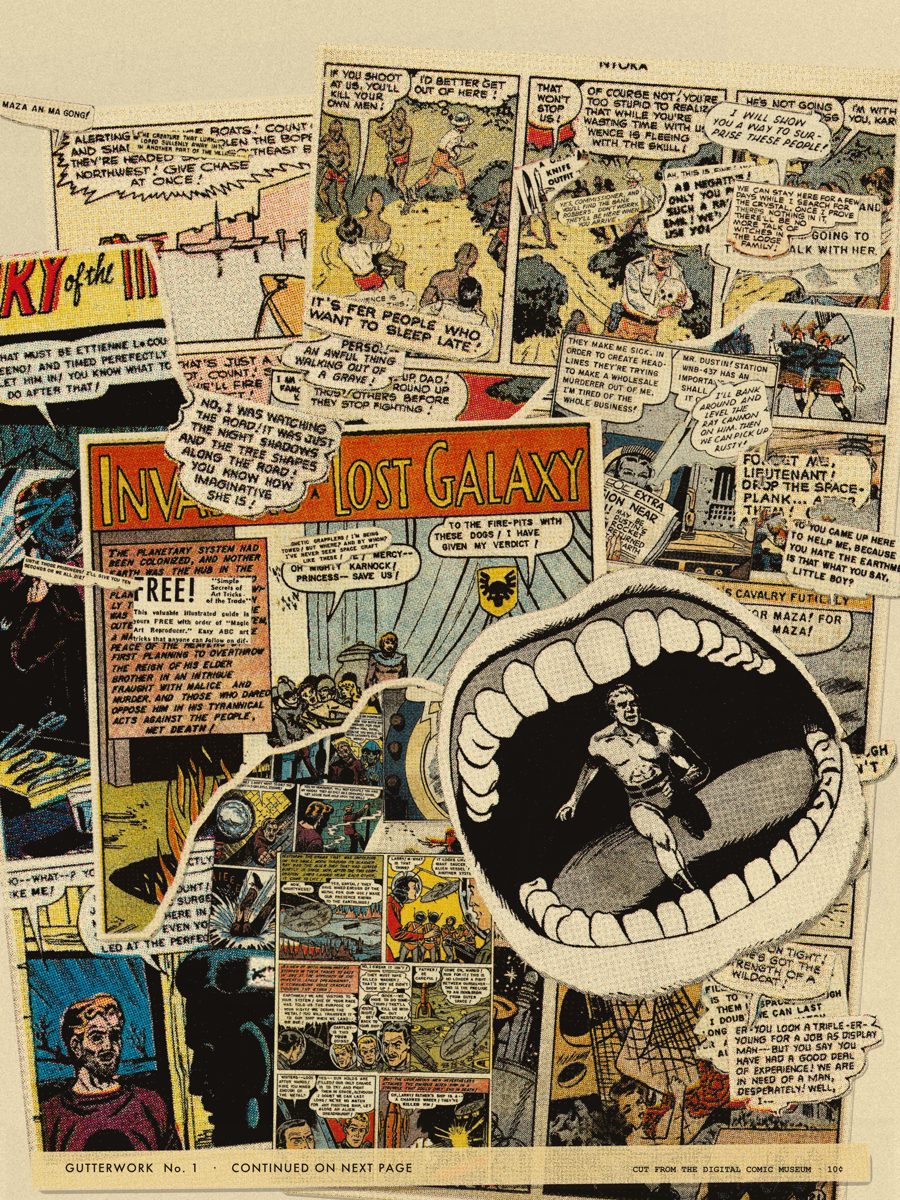
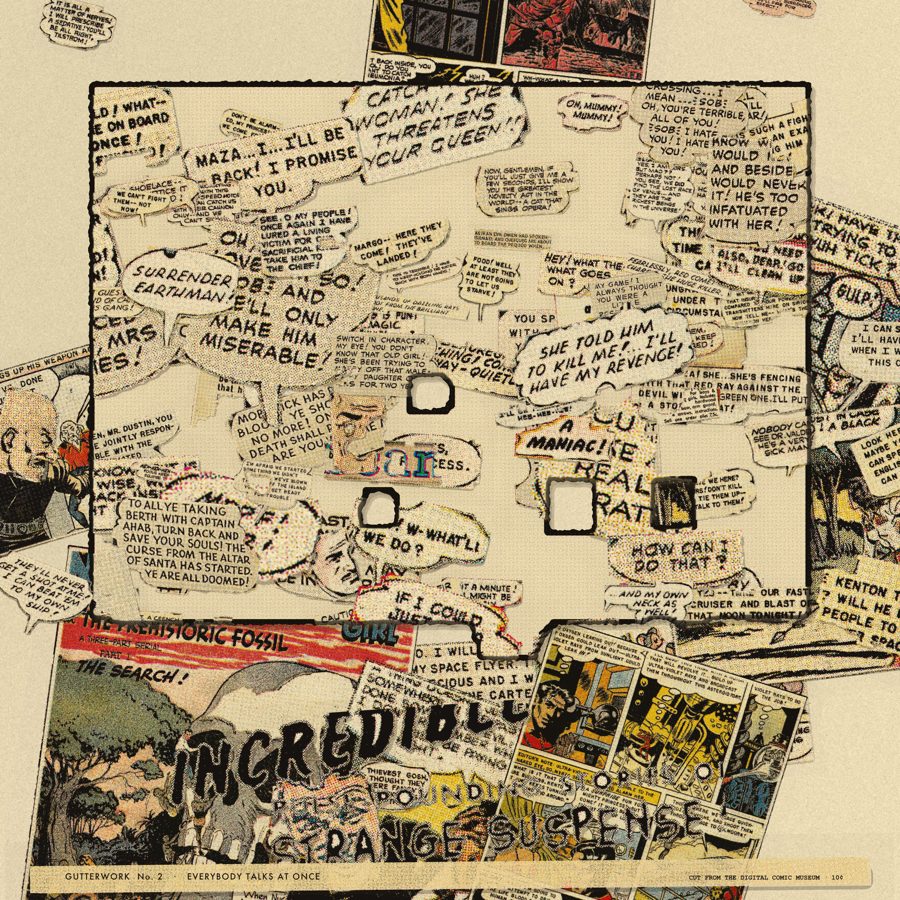
The five collages
Click one to peel its strataGutterwork Seed
The generative press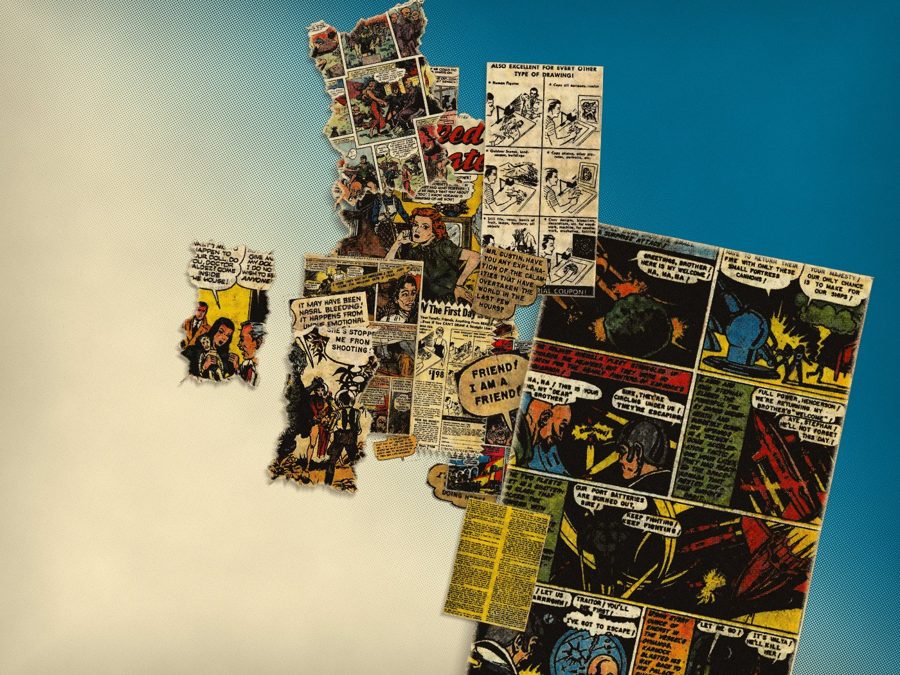
- Eight presses — four-colour halftone, two-ink riso, tritone, black plate, out of register, scan glitch, solarised, plain.
- Seven sheets — newsprint, kraft, ink black, poster colours, a torn split field, a halftone gradient, riso stock.
- Endless mode — an infinite canvas of seeded cells with a drifting camera. Drag to wander, wheel to zoom.
Gutterwork Studio
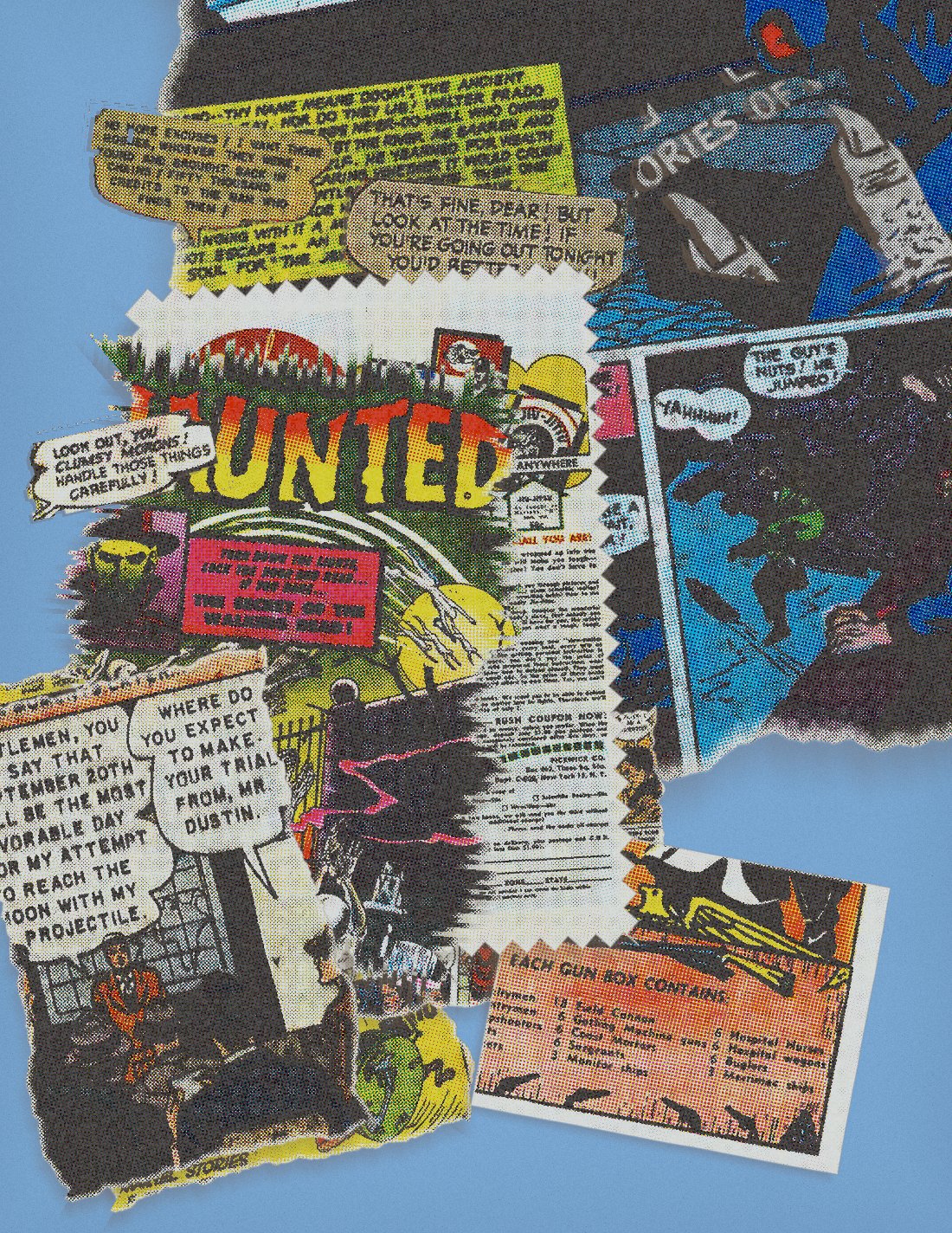
Build your own · export for printDrag complete story pages, panels cut along their own borders, word balloons, coupons, ads, covers and knockouts from twenty-one public-domain books onto a true print-size sheet. Choose how each piece was cut — torn, ripped, pinked, clean, frayed — and how violently. Pick the stock and the press. Then export the whole sheet at 300 dpi: the tears and the halftone are re-computed at print resolution, never upscaled.
- Letter, Tabloid, A4, A3, square and comic-book sheets.
- Undo/redo, layers, duplicate, flip, black-plate-only, opacity, re-tear.
- Lettering and ransom notes — set your own words in comic faces, or spell them in real printed initials cut from British Library book scans via BL Type.
- Print preview with borders — keyline, mat, comic ink border or frame — and a wall mock-up; export PNG, JPEG or a true-size PDF with bleed and crop marks at up to 600 dpi.
- Save and reopen projects as JSON; your sheet autosaves in the browser.
The philosophy
A movement called GutterworkHow it was cut
data-layer names, which is what the peel controls read. Seed and Studio run the same press live in GLSL.Why these books. The Digital Comic Museum keeps only titles whose US copyright was never renewed, so whole publications — stories, ads, indicia, letters pages — are free to cut. No character a reader could name appears here on purpose; the anonymous page tears more honestly.
Files. Each piece: .svg (peelable) and .png (2400 px). Plus philosophy.md, attributions.md and the build folder.
Sources — the ledger
Every row is a Golden Age comic book scanned by Digital Comic Museum volunteers and mirrored on the Internet Archive; all are US public domain (copyright not renewed, DCM-vetted). The full ledger, with the two books pulled and excluded, is attributions.md.